The Role of AI Consulting Services in Project Success

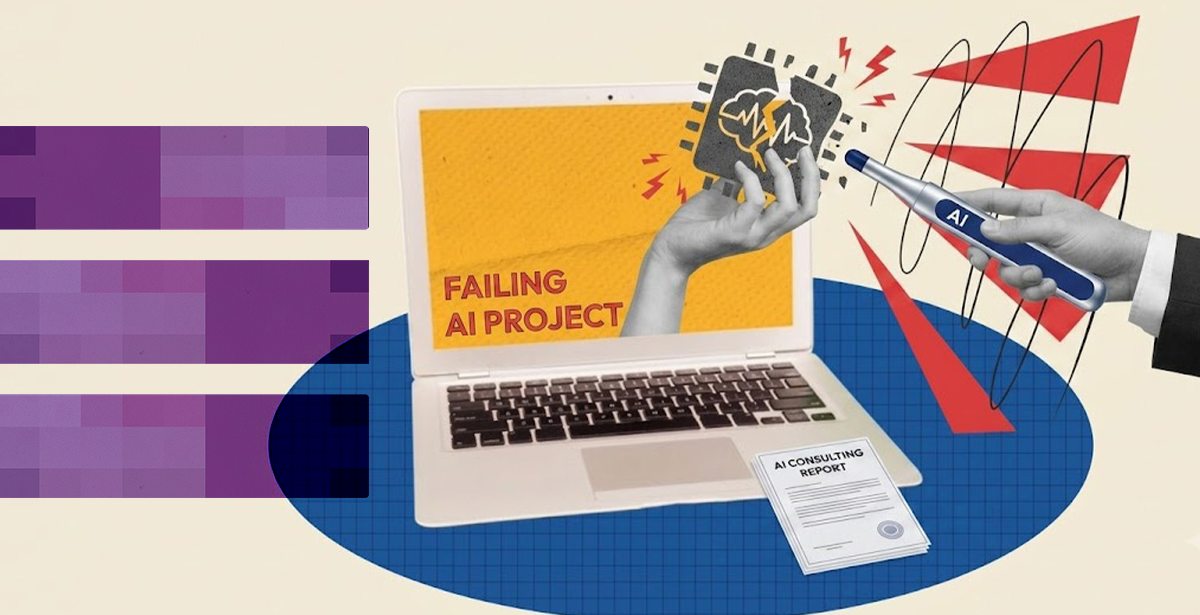
Most AI projects don’t fail because the technology doesn’t work. They fail before that. They stall in the strategy meeting. The data pipeline never gets built. The gap between a promising prototype and a production system never closes.
If your organization has seen an AI initiative stall, run over budget, or quietly get shelved, you’re not alone. The fix isn’t more AI. It’s better AI consulting services.
The Numbers Are Ugly
According to McKinsey’s State of AI research, most organizations deploy AI in fewer functions than they originally anticipated. IBM research has found that 82% of enterprise data science projects never reach production deployment.
These are not technology failures. They are strategy, planning, and execution failures.
The models, the infrastructure, the tooling have never been more capable or accessible. What’s broken is the process that surrounds them. The AI sector is awash in demos that never shipped and roadmaps that never moved.
Why AI Projects Actually Fail
Three failure modes account for most of the wreckage.
The first is a missing business case. Organizations launch AI initiatives because they feel pressure to modernize, not because they’ve identified a problem AI can solve better than anything else. Without a clear, measurable outcome, no one can define success. Projects drift until the budget runs out.
The second is data unreadiness. AI models are only as good as the data they’re trained on. Most organizations discover, midway through an engagement, that their data is siloed, inconsistent, or too sparse to train anything useful. Data readiness should be the first checkpoint, not a late-stage revelation.
The third is the PoC-to-production gap. A working prototype is not a production system. It has no monitoring, no retraining pipeline, no data drift detection, and no integration with existing workflows.
AI proof of concept development and production deployment are different disciplines. Treating them as a single continuous step is how projects stall at the finish line.
What the Right AI Consulting Services Actually Do
The difference between AI initiatives that succeed and those that fail is not model sophistication. It’s the quality of the process surrounding it.
Effective AI consulting services start with the business problem, not the technology. They define measurable success criteria before writing a line of code. They audit data before selecting a model architecture. They build with production in mind from the first sprint, not the last.
DPL’s work with National Janitorial Solutions illustrates this. The problem was clear: 50,000+ daily work orders generating unstructured data that no one could process at scale.
The solution used Google Document AI and GPT-3.5 Turbo to automate document classification and data extraction. The result was 400 hours per week saved in manual labor.
Not a demonstration. A production system handling real volume from day one. That’s the standard every AI consulting engagement should be held to.
AI Strategy Consulting That Starts with Business Outcomes
Enterprise AI consulting fails when the mandate is “deploy AI” rather than “solve this specific problem.” The strategy layer is where the shape of everything downstream gets determined.
Good AI strategy consulting answers four questions before any model is selected:
- What is the specific business problem?
- What does success look like in measurable terms?
- What data exists to support this, and is it ready?
- What does production deployment actually require?
Most AI strategy consulting engagements skip these questions entirely. That’s the first red flag.
DPL’s engagement with the Sindh Ombudsman started with exactly this framing. The government body processed 1,000+ citizen complaints daily through a paper-based system. The outcome target was specific: faster resolution, measurable classification accuracy, and zero security incidents.
The resulting system delivered 65% faster complaint processing, 92% AI classification accuracy, and 42% higher citizen satisfaction.
Specificity at the strategy layer is what makes the outcome layer predictable.
What to Demand from AI Advisory Services
Not every AI development company can take a project from strategy through production. Most excel at one phase and struggle at the others.
When evaluating AI advisory services, these questions reveal what a provider can actually do:
- Can you show a production deployment, not just a demo?
- How do you handle model monitoring and retraining after launch?
- What does your data assessment look like before architecture is selected?
- How have you handled this specific domain: healthcare, logistics, government, or finance?
MLOps is where AI implementations most commonly fail post-launch. Without a structured retraining pipeline, a model can drift from 90% accuracy at launch to 70% within six months. AI implementation consulting that stops at deployment is only half an engagement.
💡Preventing AI model failure requires continuous monitoring after deployment. An MLOps services provider tracks data drift, concept drift, prediction quality, and system performance, then triggers alerts or retraining when thresholds are exceeded. Versioning datasets, features, models, and environments also enables reproducibility and fast rollback, helping teams keep AI systems accurate and reliable in changing real-world conditions.
The Right AI Consulting Services Don’t Sell AI. They Solve Problems.
The organizations that get AI right don’t start by asking which models to use. They start by asking what outcomes they need and whether AI is the right mechanism to achieve them.
DPL’s enterprise generative AI services have shipped production AI systems across government, healthcare, facility management, and IoT analytics. Each engagement started from a defined problem, not a technology preference.
If your organization is evaluating enterprise AI consulting partnerships, start the conversation with the problem. That’s where the real work is.

Related Articles
-
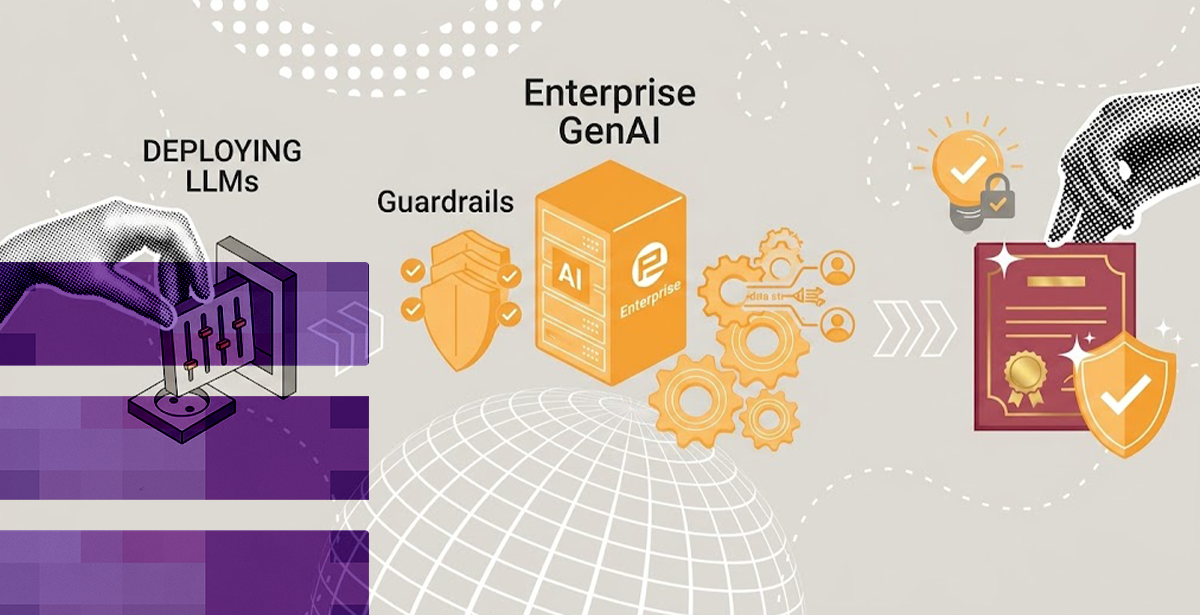
Enterprise Generative AI – Deploying LLMs With the Guardrails Large Organizations Require
05-Jun-2026 Salman Naseer
-
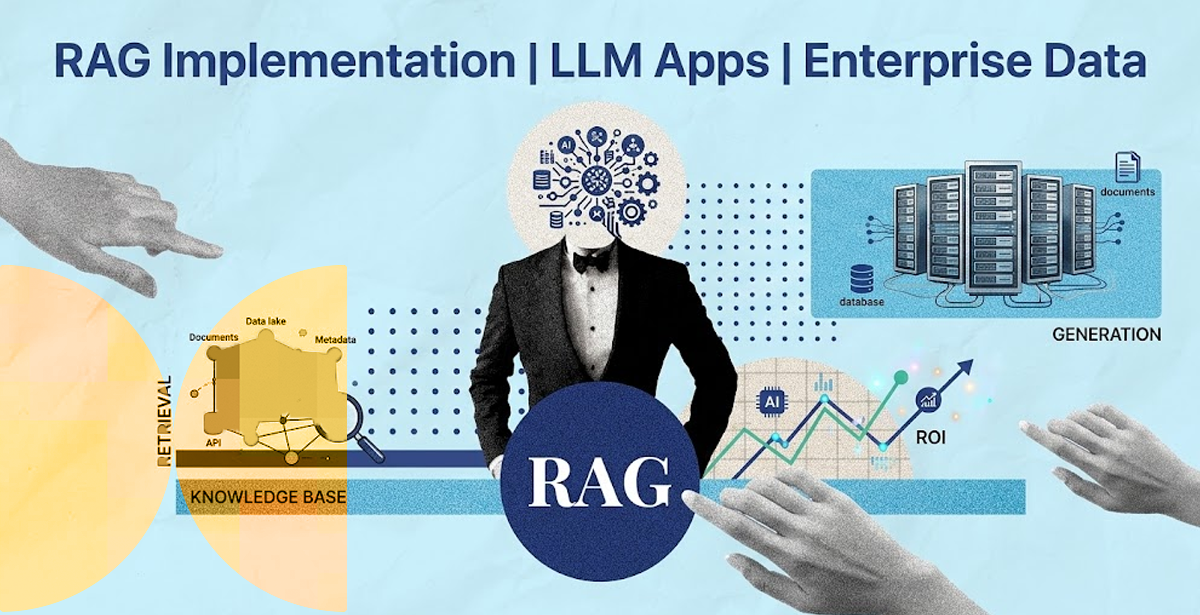
RAG Implementation Services for Building Knowledge-Grounded LLM Applications
21-May-2026 Salman Naseer
-
Choosing the Right AI App Development Company to Build Intelligent Apps
18-May-2026 Talha Saleem