Choosing the Right AI App Development Company to Build Intelligent Apps

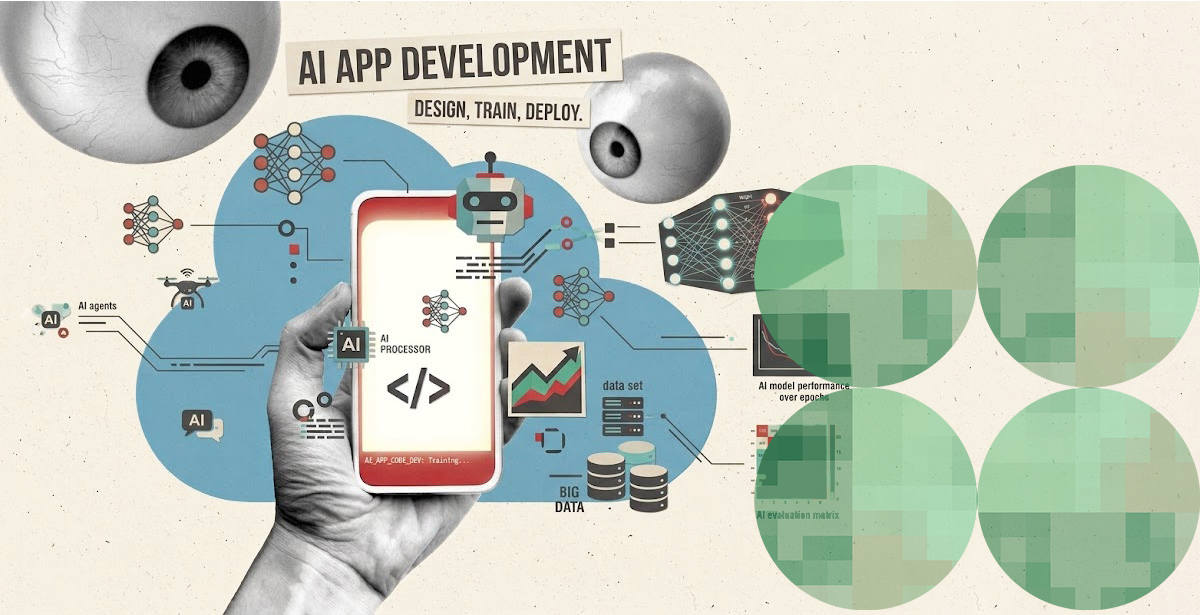
The market for AI-powered apps is moving fast; and the wrong development partner can cost you months, budget, and market position.
Choosing the right AI app development company isn’t just a procurement decision. It’s a strategic one. The team you pick will shape how your product thinks, learns, and scales.
What Does an AI App Development Company Actually Do?
An AI app development company designs, builds, trains, deploys, and maintains applications powered by artificial intelligence. Instead of creating traditional software with fixed logic, these companies develop systems that can learn from data, automate decisions, generate content, and improve user experiences over time.
Their work typically includes:
- AI Strategy and Consulting – Identifying where AI can create measurable business value
- Custom AI Application Development – Building web, mobile, or enterprise apps powered by machine learning or generative AI
- LLM and Chatbot Development – Creating AI assistants, copilots, and conversational interfaces using large language models
- Data Engineering and Model Training – Preparing datasets and training models for accuracy and performance
- AI Integration – Connecting AI capabilities with CRMs, ERPs, cloud platforms, APIs, and business workflows
- Computer Vision and Automation – Developing systems for image recognition, document processing, predictive analytics, and workflow automation
- MLOps and Scaling – Monitoring, optimizing, securing, and continuously improving AI systems after deployment
Beyond coding, an AI app development company also helps organizations manage AI governance, scalability, security, compliance, and real-world adoption. The goal is to turn AI into practical business outcomes such as operational efficiency, better customer experiences, and new revenue opportunities.
💡To maximize ROI, consider hiring a dedicated team for your next AI app project. For AI app projects, hiring dedicated software developers is often more effective than traditional fixed-scope engagements because AI development is iterative, experimental, and data-driven. Dedicated teams can continuously refine models, adapt to changing datasets, and improve performance in real time—something rigid contracts struggle to support. This flexibility leads to faster learning cycles, better model accuracy, and AI solutions that actually evolve with business needs instead of becoming outdated after delivery.
Why Mobile AI App Development Demands Extra Rigor
Mobile introduces constraints that desktop and web don’t. On-device inference, battery consumption, latency, offline behavior — mobile AI app development requires deliberate architecture decisions before a single line of code is written.
Companies that treat mobile as an afterthought tend to build AI models on the assumption of reliable cloud connectivity and unlimited compute. That breaks down fast on a smartphone in the real world.
The right partner thinks mobile-first when it matters: designing for on-device processing where latency is critical, optimizing model size without sacrificing accuracy, and choosing the right mobile AI framework for your platform.
And that’s one practice we at DPL have been following since adopting AI. We design AI features alongside the core product architecture rather than adding them later when it’s expensive to change.
The Core Pillars of Strong AI Application Development
AI application development that delivers business value rests on four pillars:
1) Data Readiness
AI models are only as good as the data they train and run on. A credible partner audits your data situation early and builds the pipelines needed to make it usable. DPL’s data engineering services underpin every AI engagement for exactly this reason.
2) Model Selection and Customization
Off-the-shelf models work for generic tasks. Custom problems need custom solutions, be it fine-tuning an LLM on domain-specific content, training a computer vision model on your product imagery, or building a RAG pipeline over your proprietary knowledge base.
3) Integration with Existing Systems
An AI feature that can’t connect to your CRM, ERP, or data warehouse delivers half its potential value. Strong AI app partners treat integration as a first-class concern, not an afterthought.
💡Many integration vendors focus their pitch on what sounds smoothest—fast connectivity, prebuilt connectors, and quick deployments—but often leave out the harder realities. Many factors that can impact the billing of software integration services rarely get the same attention upfront. You need to be on top of these. After all, the real value isn’t in how quickly systems connect on day one, but how reliably they stay connected as your ecosystem grows and changes.
4) MLOps and Ongoing Performance
Models drift. Data distributions shift. An AI-powered application needs monitoring, retraining pipelines, and clear ownership of model performance over time. Ask any prospective partner how they handle this. Their answer will tell you a lot.
What to Look for in an AI-Powered App Development Partner
When evaluating firms for AI-powered app development, you should always go beyond the pitch deck. You should especially focus on the following:
- Shipped products
- Domain experience
- Technical breadth
- Process transparency
Shipped Products, Not Just Prototypes
Demos are easy. Production deployments are hard. Ask for case studies with real outcomes — throughput gains, cost reductions, accuracy metrics. DPL’s work for National Janitorial Solutions, for example, resulted in 400 hours per week in time savings and 50,000+ work orders processed daily using Document AI and GPT-3.5 Turbo.
Domain Experience in Your Industry
AI behaves differently in healthcare than it does in fintech or logistics. Regulatory constraints, data sensitivity, and edge cases vary dramatically. A partner with cross-industry experience rather than just one vertical brings pattern recognition that accelerates delivery.
Technical Breadth Across the AI Stack
Look for genuine depth across LLMs, computer vision, NLP, and predictive analytics. A firm that only knows one AI modality will shape your problem to fit their toolbox.
Process Transparency
AI development involves uncertainty. Good partners communicate clearly about what’s working, what isn’t, and when a model needs a different approach. Opacity at the pilot stage becomes a serious problem at scale.
DPL has delivered AI-powered systems across healthcare, finance, manufacturing, government, and more — and holds ISO 27001 and 27701 certifications to back its security posture. It’s also the only company from South Asia recognized in Newsweek’s 2025 Global Top 100 Most Loved Workplaces.
Custom AI Apps vs. Pre-Built AI Platforms
The decision between custom AI apps and SaaS-based AI platforms comes down to three factors: differentiation, data control, and long-term cost.
Pre-built AI platforms are fast to deploy. They’re also generic by design. If your competitive advantage comes from how you use data — not just that you use AI — a pre-built platform puts a ceiling on what’s possible.
Custom AI apps take longer upfront. Done right, they compound. The model improves as your data grows. The logic reflects your specific workflows. The IP is yours.
According to McKinsey’s 2024 State of AI report, organizations that customize AI models for specific business functions see significantly higher value realization than those using off-the-shelf tools — particularly in functions like supply chain, product development, and customer service.
DPL’s approach to custom software development applies the same principle: bespoke solutions built for real problems, not templates dressed up as products.
Red Flags to Watch For
Not every AI development company delivers what it promises. You should especially watch out for these warning signs:
- Vague claims about AI capabilities with no concrete examples of what models they’ve built and deployed
- No mention of MLOps, model monitoring, or post-launch support
- Proposals that jump straight to a full build without a proof of concept phase to validate feasibility
- Inability to explain how they’ll handle your data security and compliance requirements
A reputable partner welcomes hard questions about model performance, data handling, and what happens when the model gets things wrong.
Have an AI App in Mind?
Choosing an AI app development company is one of the highest-leverage decisions your product or technology team will make this year. The right partner brings technical depth across the AI stack, real-world delivery experience, and the product instincts to build something that works for users — not just in a lab.
If you’re ready to move from AI strategy to AI execution, explore DPL’s AI and software engineering capabilities or book a consultation to discuss your product’s specific requirements.

Related Articles
-
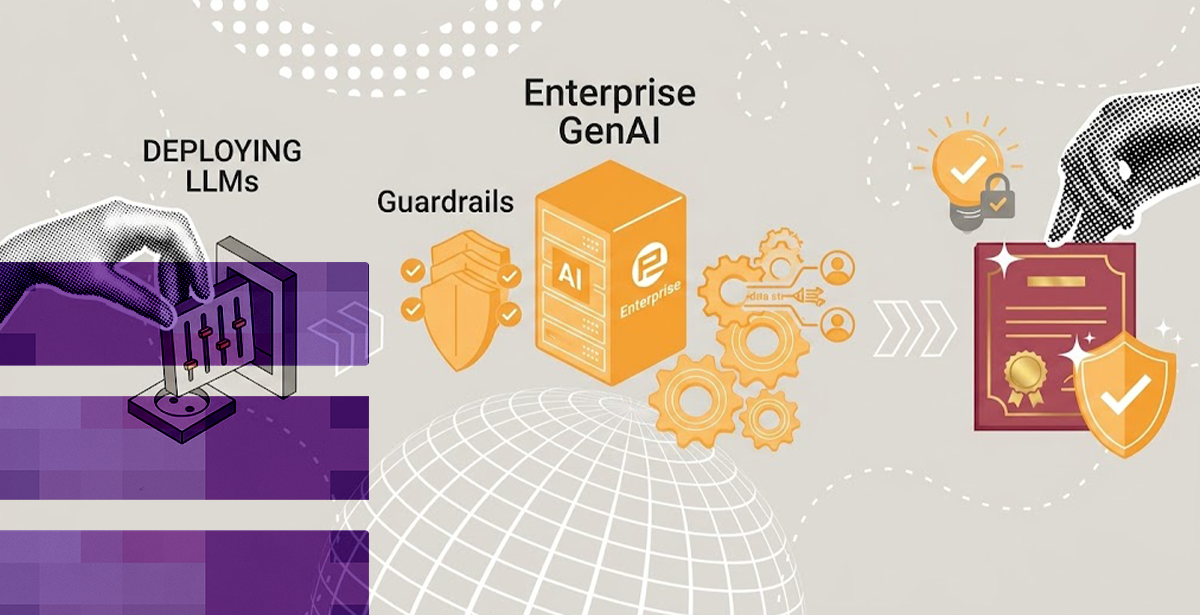
Enterprise Generative AI – Deploying LLMs With the Guardrails Large Organizations Require
05-Jun-2026 Salman Naseer
-
RAG Implementation Services for Building Knowledge-Grounded LLM Applications
21-May-2026 Salman Naseer
-
AI Proof of Concept Development: The Smart Way to Validate Innovation
14-May-2026 Maha Yaser