
AI in Facility Management – Smarter Buildings, Predictive Maintenance, and Optimized Workforces

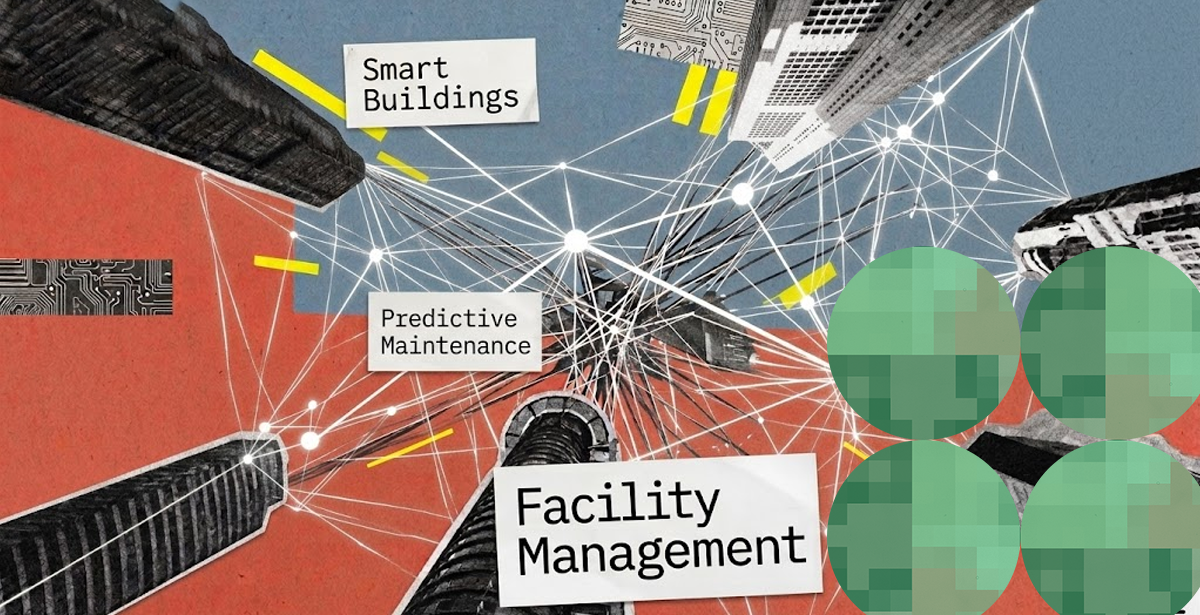
Facility teams spend roughly 80% of their maintenance budget on reactive repairs. Equipment fails. Technicians respond. The cycle repeats. It is not a strategy.
AI in facility management breaks that cycle. Sensors feed real-time data into predictive models. Anomalies get flagged before failures occur. Work orders route automatically. Energy systems self-optimize.
The global smart building market sits at $141.79 billion today. It is projected to reach $554 billion by 2033. Facility operations teams that deploy AI now will operate on a different cost curve than those that wait.
Predictive Maintenance: From Reactive to Proactive
Predictive maintenance is the clearest entry point for AI in facility management. The premise is direct. Sensors monitor equipment continuously. Machine learning models establish normal operating baselines. Deviations trigger alerts before a failure occurs.
McKinsey data shows predictive maintenance reduces unplanned downtime by 30 to 50%. Unplanned equipment downtime costs facility teams an average of $260,000 per hour. The financial case is not subtle.
DPL built this capability for iApartments, an IoT smart home platform deployed across 30,000+ US apartments. The system analyzed 13 months of HVAC sensor data per unit. It established individual runtime baselines and flagged anomalous units before equipment failed.
A single vacant unit was running 210 hours per cycle. The occupied-unit norm was 1 to 7 hours. That is the kind of anomaly a predictive analytics model catches weeks before a costly breakdown.
The broader platform outcomes: 60% reduction in mean time to resolution, property onboarding cut from 4 weeks to 3 days, and 28% improvement in resident satisfaction.
Smart Facility Management Through AI Building Systems
Smart facility management goes beyond maintenance scheduling. It means the building itself becomes an active operational layer.
AI building management systems connect HVAC, lighting, access control, and energy infrastructure through a unified data layer. Machine learning models learn usage patterns across floors, occupancy schedules, and seasonal conditions. The system adjusts continuously. Energy waste drops. Tenant comfort improves without manual intervention.
The 2026 Johnson Controls AI and Digitalization in Facilities Management Report found that 65% of business leaders already use AI to improve building operations. Among facility managers, 47% have deployed it specifically for predictive maintenance. Adoption is accelerating.
IoT connectivity is the operational foundation. DPL’s IoT development capabilities have supported platforms managing 200,000+ connected devices across residential and commercial properties. The data generated feeds directly into AI models for occupancy, energy, and maintenance decisions.
Workforce Optimization Through Facilities AI Automation
AI does not replace facility technicians. It removes the work that does not require human judgment.
Facilities AI automation handles work order intake, classification, and routing. AI models read incoming requests and extract structured data. They assign tickets to the right technician based on skill, location, and current availability. Supervisors handle exceptions. Routine volume runs itself.
DPL built this infrastructure for National Janitorial Solutions, a facility management company with 18,000 locations across the US. The system processes 50,000+ work orders daily using Google Document AI and GPT-3.5. It classifies documents, extracts PO and invoice numbers, and stores records automatically.
The outcome: 400 hours per week saved in manual labor. A 1% reduction in labor costs. Processing throughput that no manual team could sustain at that scale.
What Intelligent Facility Operations Look Like End-to-End
Intelligent facility operations are not a collection of standalone AI tools. They are a connected system where data flows continuously between sensors, models, and human decision-makers.
Sensors feed a real-time data pipeline. Predictive models surface anomalies and trigger maintenance workflows. Automated classification routes work orders to the right field technician. Energy management systems adjust building parameters based on live occupancy data. Human facility managers focus on strategy, not ticket queues.
The AI in Workforce Management market is growing at 22.3% CAGR and is on track to reach $14.2 billion by 2033. Facilities operators building this infrastructure now are capturing compounding efficiency gains.
Research on AI ROI in facility management consistently shows that organizations implementing predictive maintenance and smart automation see payback periods under 18 months. The investment case is measurable from day one.
AI Is Not a Future Upgrade for Facility Management
Facility management has traditionally been reactive, labor-intensive, and data-poor. AI changes all three simultaneously.
Smart facility management pairs sensor data with machine learning to predict failures before they happen. AI building management connects disparate building systems under one intelligent layer. Facilities AI automation eliminates the manual processing overhead that keeps skilled technicians stuck in administrative work.
The result is lower operating costs, fewer emergency repairs, and a workforce that focuses on outcomes rather than inputs. DPL’s custom AI model development and AI engineering practice are built for facilities teams ready to make that shift. So, tap into our team’s strengths in AI and IoT development, and get the solutions your business needs to innovate.