How Sentiment Analysis Services Decode Customer Sentiment

Your customers are talking. They’re leaving star ratings on product pages, venting on X, filling out post-purchase surveys, and posting in community forums. The signal is everywhere, but the challenge is making sense of it at scale.
That’s exactly what sentiment analysis services are built to do.
For businesses competing on customer experience, opinion data isn’t a nice-to-have; it’s a strategic asset. Organizations that extract it systematically and act on it quickly consistently outperform those still relying on quarterly surveys and gut instinct.
This is the shift from reactive to proactive customer intelligence. And the technology to make it happen is mature, proven, and deployable right now.
What Is Sentiment Analysis?
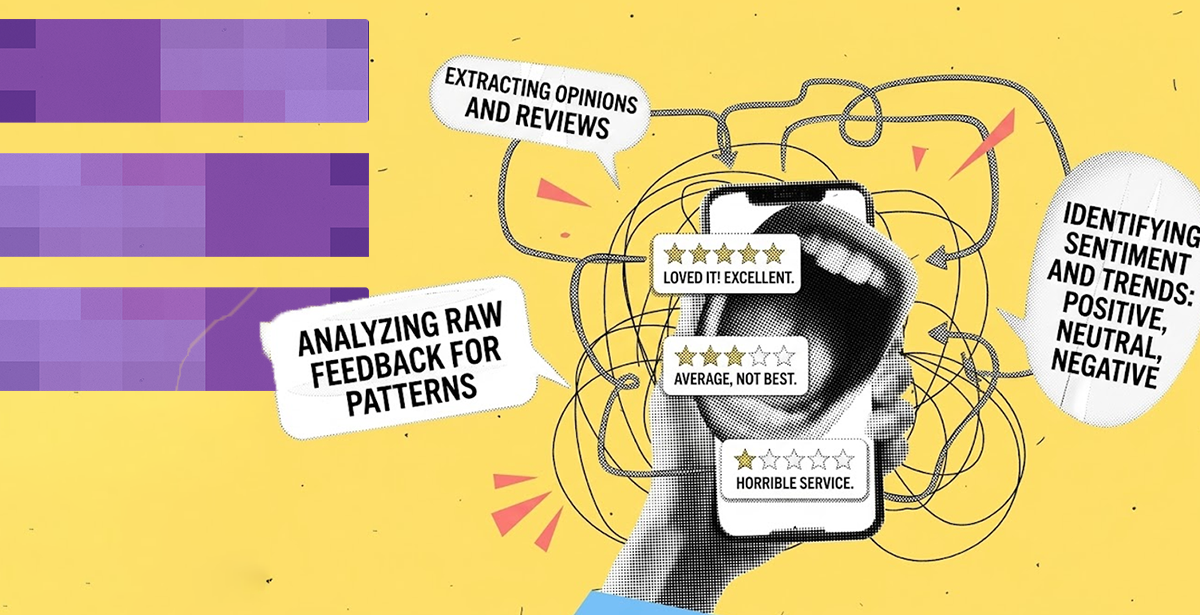
Sentiment analysis uses natural language processing (NLP) and machine learning to classify the emotional tone of text — positive, negative, or neutral — and extract structured meaning from unstructured language at scale.
At the basic level, it tells you whether a customer review is satisfied or disappointed. At a more sophisticated level, it tells you why as in which product attribute failed, which feature they love, and what they want changed. This nuanced layer is what separates commodity tools from enterprise-grade opinion mining services.
Modern systems go well beyond polarity scoring. They detect sarcasm, identify specific emotions like frustration or delight, extract topics, and compare sentiment across time periods, regions, or competitor mentions.
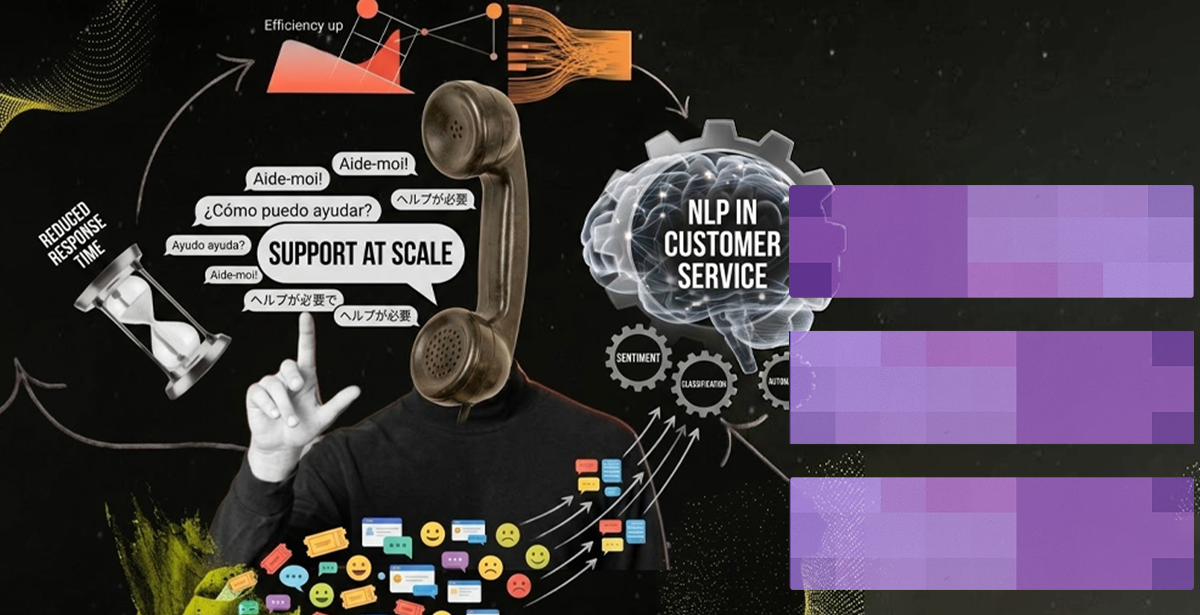
💡 NLP has proven to be highly effective while analyzing customer conversations across chat, email, and social media. Leveraging Natural Language Processing in customer service helps identify customer intent, sentiment, and common issues in real time, enabling faster resolutions, more personalized interactions, and continuous improvements to the customer experience.
Where Customer Opinion Data Lives
The three richest sources of customer opinion data each have distinct characteristics that shape how sentiment models need to be built and deployed.
1) Online Reviews
Online reviews are structured and intent-rich. A user writing a product review on Amazon or Trustpilot is actively reflecting on their experience. This makes review data high-quality for training opinion models.
The downside: review volume can be inconsistent and skewed toward extreme experiences.
2) Social Media
Social media is real-time and unfiltered. According to the Pew Research Center, the majority of American adults now use multiple social media platforms. Platforms like X, Reddit, LinkedIn, and Instagram generate enormous volumes of informal, fast-moving text.
Social media sentiment analysis on this corpus demands models trained on slang, abbreviations, emojis, and domain-specific language. This poses a harder problem than structured review text, but one that delivers the earliest possible signal on brand perception shifts.
3) Surveys
Surveys offer the cleanest data: you asked the question, the respondent answered it. But open-text survey responses often go unanalyzed.
Text analytics services applied to survey responses can surface patterns across thousands of responses that no human team could manually code in a meaningful timeframe.
Each source demands different pre-processing, different model configurations, and — ideally — a unified pipeline that aggregates insights across all three.
How AI Sentiment Analysis Works in Production
AI sentiment analysis at production scale involves far more than running text through a pre-trained model. A real implementation includes five distinct layers.
- Data Ingestion — Pulling structured and unstructured data from review platforms, social APIs, survey tools, and CRMs into a unified pipeline.
- Pre-processing — Cleaning, normalizing, and language-detecting text before it reaches the model.
- Multi-label Classification — Assigning sentiment scores, topic tags, and intent categories simultaneously.
- Entity Resolution — Linking mentions to specific products, features, competitors, or campaigns.
- Output Delivery — Pushing enriched data to dashboards, alerting systems, and downstream analytics tools.
Pipeline architecture is where MLOps becomes critical. A sentiment model that was accurate six months ago can degrade quietly as language evolves, new products launch, or market conditions shift.
💡 When selecting MLOps service providers, look beyond model deployment capabilities. Choose MLOps services that offer end-to-end automation, monitoring, governance, scalability, and continuous model retraining. The right MLOps partner helps ensure your AI solutions remain reliable, compliant, and effective as data, customer behavior, and business requirements evolve.
The Business Case for Brand Sentiment Monitoring
Brand sentiment monitoring is the ongoing practice of tracking how customers feel about your brand across channels. And comparing that perception over time, across regions, and against competitors.
The ROI case is direct. McKinsey research consistently shows that companies acting on customer feedback analytics outperform peers on revenue growth.
When sentiment data flows into product roadmaps, marketing messaging, and customer success workflows, it stops being a reporting metric and becomes a live decision engine.
Specific use cases where sentiment analysis drives measurable impact:
- Product teams catching feature complaints early enough to fix them before they appear in churn data
- Marketing teams measuring campaign sentiment in near real-time and pivoting messaging accordingly
- Customer success flagging at-risk accounts based on declining sentiment scores in support conversations
- Leadership tracking brand sentiment scores alongside NPS as a leading indicator of business health
Choosing Opinion Mining Services That Hold Up at Scale
Not all opinion mining services are equal. The gap between a prototype and a production system often isn’t visible in a demo. It surfaces in edge cases, scale, and model drift over time.
When evaluating providers –
- Look for multi-source ingestion that handles your full data estate — not just one channel.
- Demand domain adaptation: has the model been fine-tuned on language from your industry?
- Insist on explainability, so the system tells you why it scored something as negative, not just that it did.
- Look for an MLOps backbone with monitoring and retraining built in from day one.
DPL’s NLP and AI sentiment analysis capabilities span the full stack — from pipeline design and model development to deployment and ongoing maintenance.
In our work with the Sindh Ombudsman, sentiment analysis automatically flagged and prioritized urgent citizen complaints, delivering 92% classification accuracy and a 65% reduction in resolution time.
Turning Customer Voice Into Competitive Advantage
Customer opinions are the most abundant — and most underutilized — source of strategic intelligence most organizations hold.
Sentiment analysis services convert that raw signal into structured insight that product teams, marketers, and executives can act on.
The technology is proven. The business case is clear. What separates leaders from laggards is execution — building systems that don’t just analyze sentiment today, but stay accurate and actionable as your business evolves.
DPL builds those systems. Explore DPL’s AI and software engineering services to learn why organizations choose DPL for high-stakes AI deployments.