Custom ML Model Development – Building Proprietary Models Trained on Your Data

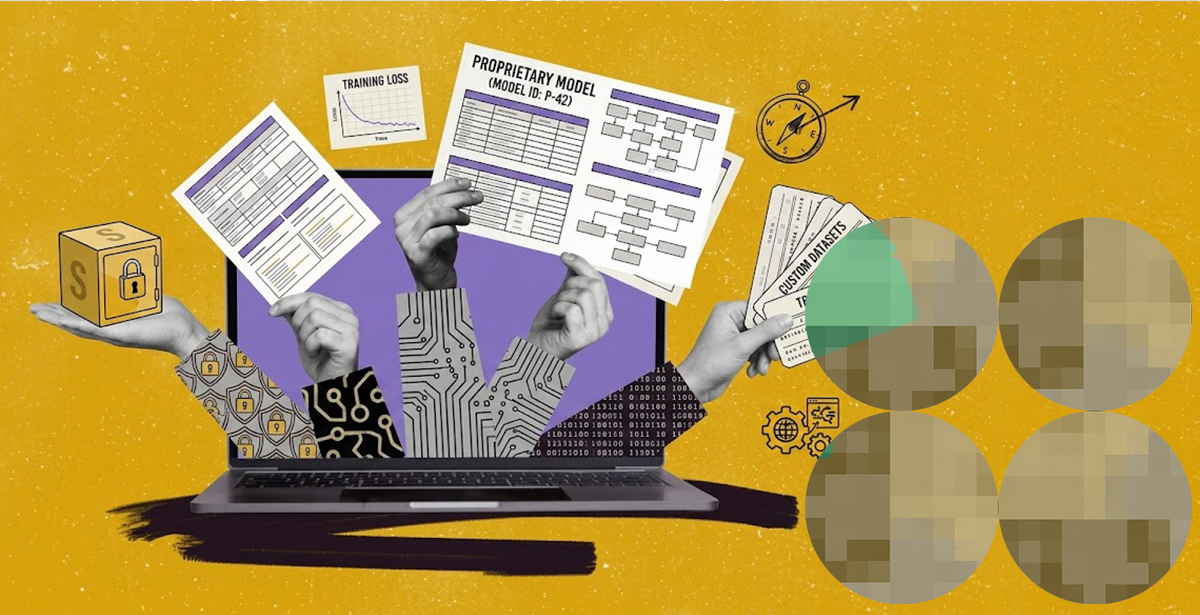
Most organizations reaching for AI today start in the same place: a general-purpose model, a popular API, a foundation model fine-tuned on someone else’s data. That works, until it doesn’t.
The moment your use case becomes specialized, the limitations surface. The model doesn’t understand your industry’s terminology. It hasn’t seen your data patterns. Its outputs need constant correction. The ceiling is visible from day one.
Custom ML model development is how organizations break through that ceiling. Instead of constraining your problem to fit a pre-built model, you build the model around your problem, trained on your proprietary data, optimized for your specific outputs.
When Off-the-Shelf Models Are Not Enough
General-purpose models are built for generalization. That’s their strength, and their limitation.
They perform adequately across a wide range of tasks, but adequately is not a competitive advantage.
According to McKinsey’s State of AI research, organizations embedding AI into core workflows at the task level are the ones extracting measurable returns. When accuracy directly affects patient safety, financial decisions, or operational uptime, “close enough” isn’t a viable standard.
There are three clear signals that a tailored ML solution is the right call.
- Your domain has specialized vocabulary or data structures the model has never encountered.
- Your data is proprietary and can’t leave your infrastructure.
- The performance gap between a general model and a task-specific one has direct business consequences.
What Custom ML Model Development Actually Involves
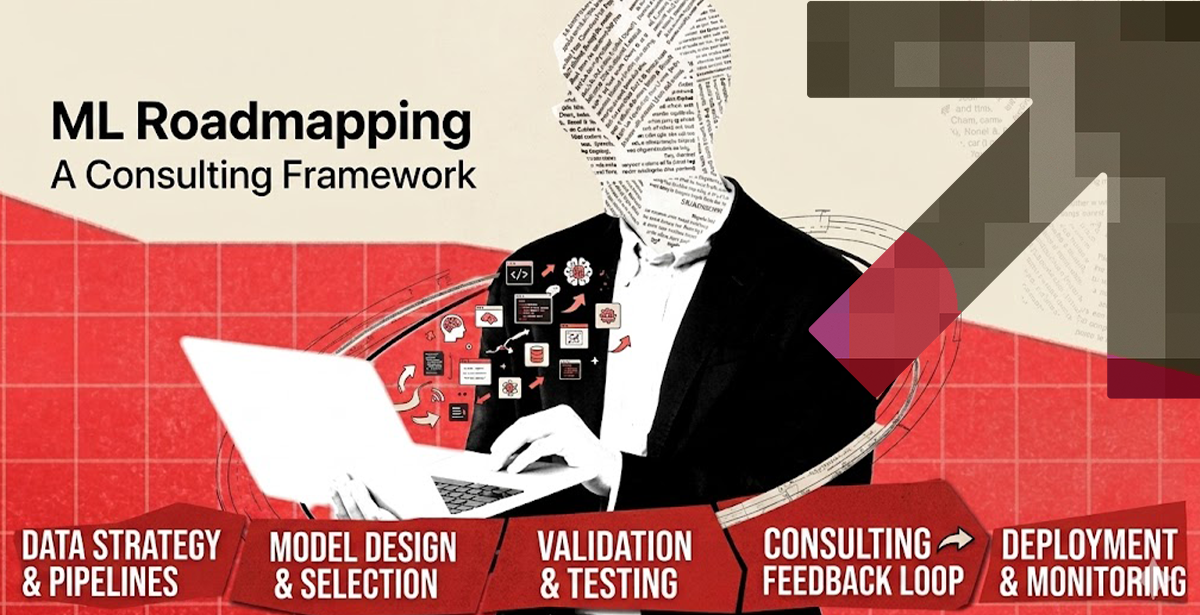
Custom model development isn’t just about training. It’s a full-lifecycle engineering process.
It starts with data. A strong data engineering foundation isn’t optional here. Your model is only as good as the data it learns from, which means cleaning, labeling, structuring, and validating training datasets before a single training run begins.
From there, the process covers architecture selection, choosing the right model type for the task, whether transformer, CNN, gradient boosting, or time-series forecasting, based on the problem. Then comes training, validation, and iterative refinement until performance meets the threshold you have defined.
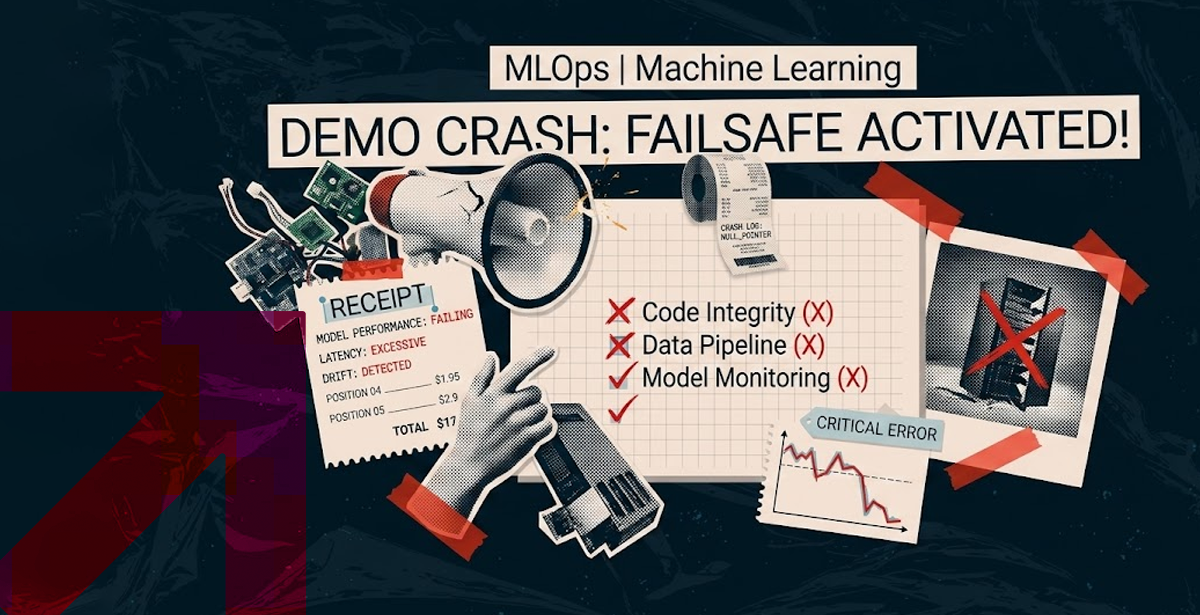
The final, often underestimated phase is deployment and monitoring. A bespoke ML model that performs well in a test environment but degrades in production isn’t a solution.
Google’s ML best practices guidance makes this point directly: most ML failures aren’t modeling failures; they’re data pipeline and deployment failures. Embedding MLOps practices from the start ensures your model stays accurate and maintainable long after launch.
💡 AI models don’t fail only because of poor training—they often fail because they’re not monitored after deployment. MLOps services help prevent model drift, data quality issues, and performance degradation through continuous monitoring, automated retraining, and governance, ensuring AI systems remain accurate, reliable, and aligned with business objectives over time.
The Case for Proprietary ML Models
Building a proprietary machine language model on your own data delivers three advantages that off-the-shelf tools cannot replicate.
First, performance. A model trained on your specific data distribution will outperform a general model on your task. That gap widens as your data volume and quality grow.
Second, data sovereignty. Your proprietary data never leaves your infrastructure. For organizations in healthcare, finance, or government, this isn’t a preference. It’s a regulatory requirement.
Third, competitive moat. General models are available to every organization. A custom-trained model built on your unique data is not. It becomes an asset that compounds over time as production data feeds back into retraining pipelines.
Custom Model Training in Practice
The requirements for custom model training become concrete when you look at what production deployments actually demand.
When DPL built the AI verification system for Digital Quran (Hafiz), no off-the-shelf OCR or NLP model could meet the standard. The system needed to authenticate Quranic text across different calligraphy styles and dialects with zero tolerance for error.
DPL developed a custom pipeline combining computer vision and NLP models trained on authenticated text data. The result was 99% precision in text authentication, a standard no general-purpose model was designed to reach.
Another example from our archives is that of iApartments. At the infrastructure scale, DPL built a time-series forecasting model that analyzed 13+ months of HVAC sensor data across 30,000 apartments to detect equipment failures before they occurred.
The model established per-unit performance baselines and flagged anomalies proactively, enabling condition-based maintenance instead of reactive repair.
That kind of precision requires a model trained on your specific equipment, your specific failure modes, and your specific data patterns. A generic predictive model would have been useless.
Both deployments illustrate the same principle: custom model training works because it’s built for one problem, not all problems.
Building a Tailored ML Solution That Holds Up in Production
Custom development doesn’t end at launch. Organizations that extract long-term value from their models treat them as living systems, not finished products.
That means drift detection to catch when real-world data diverges from training data. It means version-controlling your models so you can roll back when performance degrades. It means retraining pipelines that incorporate new data without requiring a rebuild from scratch.
Before committing to a full build, mature teams start with a focused AI proof of concept to validate the approach before scaling. This phase confirms whether your data is sufficient, your chosen architecture fits the task, and your performance targets are achievable.
Pairing that validation with machine learning consulting expertise accelerates the path from idea to production system without accumulating technical debt along the way.
Ready to Get Your Own Bespoke Machine Learning Model?
Generic models have a ceiling. Custom ML model development removes it.
When your use case demands precision, data sovereignty, or performance that general models cannot deliver, the path forward is a model built on your data, for your problem.
DPL has built custom ML systems across edtech, smart infrastructure, facility management, and more, each trained on domain-specific data with production-grade monitoring from day one.
Explore DPL’s AI engineering services to start the conversation.
Bonus: Custom ML Model Development FAQs
What is the difference between fine-tuning and building a custom model from scratch?
Fine-tuning adapts a pre-trained model to a new task by training it further on your data. Building from scratch means designing the architecture and training entirely on your dataset.
Fine-tuning is faster and requires less data. Building from scratch gives you more control and is the right call when your task is highly specialized or your data distribution is unlike anything a foundation model has seen.
How much data do you need for custom model training?
It depends on the task and architecture. Some specialized models perform well with thousands of labeled examples; others require millions.
A scoping phase with an experienced ML team will identify your data requirements before you commit to a full build.