How to Accelerate Your ML Roadmap with Machine Learning Consulting

Most organizations know they need machine learning. But only few know how to get there without burning months and budgets on the wrong path.
The gap between “we want AI” and “we have AI that works” is wider than most leaders expect. That’s where machine learning consulting comes in handy.
The right partner doesn’t just write code. It maps your destination, clears the obstacles, and keeps your team from reinventing solutions that already exist.
If you’re intrigued about how machine learning consulting accelerates your ML roadmap, you’re on the right page. Scroll further and you’ll find out what to look for in a partner, and how to know when you’re ready.
Why Most ML Roadmaps Stall
According to McKinsey’s State of AI research, only a fraction of companies that pilot AI initiatives successfully scale them across the enterprise.
The bottlenecks are rarely technical. They’re strategic: unclear problem framing, misaligned data infrastructure, and teams without the ML expertise to make confident decisions.
A structured ML roadmap addresses these before a single model is trained. Without one, teams spend months on proofs-of-concept that go nowhere, data pipelines that don’t connect, and model outputs nobody trusts.
Machine learning advisory starts by diagnosing exactly this — where you are, what you have, and what it will actually take to get where you’re going.
What a Machine Learning Assessment Uncovers
Before strategy comes clarity. A machine learning assessment evaluates your organization’s readiness across four dimensions:
- Data Maturity — Do you have the data to train models? Is it clean, labeled, and accessible?
- Infrastructure — Can your current systems support ML workloads, or will you need cloud migration first?
- Team Capability — What ML expertise exists internally? Where are the critical gaps?
- Use Case Viability — Which business problems are genuinely solvable with ML, and which are better handled with simpler solutions?
This isn’t a theoretical exercise. A rigorous assessment produces a prioritized roadmap with clear milestones, realistic timelines, and defined success metrics. This way, the business knows exactly what it’s investing in and why.
What ML Strategy Consulting Actually Delivers
ML strategy consulting bridges the gap between business objectives and technical execution.
The best ML consulting firms don’t arrive with a fixed playbook. They work backward from your outcomes — revenue growth, cost reduction, risk mitigation — and architect an ML approach that serves those specific goals.
That means making hard calls: which models to build in-house, which to buy or license, where to start with a PoC, and when to scale. It also means aligning stakeholders, so the ML team isn’t building in a vacuum while the business waits for results nobody requested.
With this in mind, DPL’s AI engineering services are built around measurable outcomes, not capability demos. Every engagement starts with one question: what does success look like for your business?
Deep Learning Consulting: Knowing When to Go Further
Not every problem needs a deep learning solution, but some do. And knowing the difference is one of the most valuable contributions a deep learning consulting partner makes.
Computer vision applications, real-time NLP systems, large-scale speech recognition, and document intelligence all require deep learning architectures. These systems cost more to build, demand more data, and are harder to maintain. Getting the scope wrong in either direction can derail timelines by months.
DPL has deployed deep learning systems across healthcare, manufacturing, and facility management — including document analysis pipelines that process 50,000+ work orders daily and NLP systems operating across multiple languages.
That operational track record informs every scoping conversation we have. You can explore the full range in our portfolio.
What to Look for in an ML Consulting Firm
Gartner’s AI market research consistently highlights execution risk as the top challenge in enterprise AI — not technology availability. The right consulting partner mitigates that risk directly.
Choosing the right ML consulting firm matters more than most organizations realize. Below are a few criteria that separate real partners from vendors:
- Technical Depth Across the Stack – The firm should take an ML initiative from data strategy through model deployment and ongoing MLOps — not hand it off at each stage.
- Honest Scoping – The best ML partners will tell you when ML isn’t the right tool for a problem. That candor is a signal of maturity, not a red flag.
- Industry Experience – ML problems in healthcare are structurally different from those in logistics. A firm that’s shipped production systems in your sector understands the constraints you’ll face.
- Past Successes – Ask for case studies. Ask for deployed systems. Ask what happened when something went wrong.
From Assessment to a Running ML Program
If your organization is at the starting line, the right first step is a structured assessment tied to a concrete PoC development plan — not a six-month implementation project. You need to understand what you’re building before you build it.
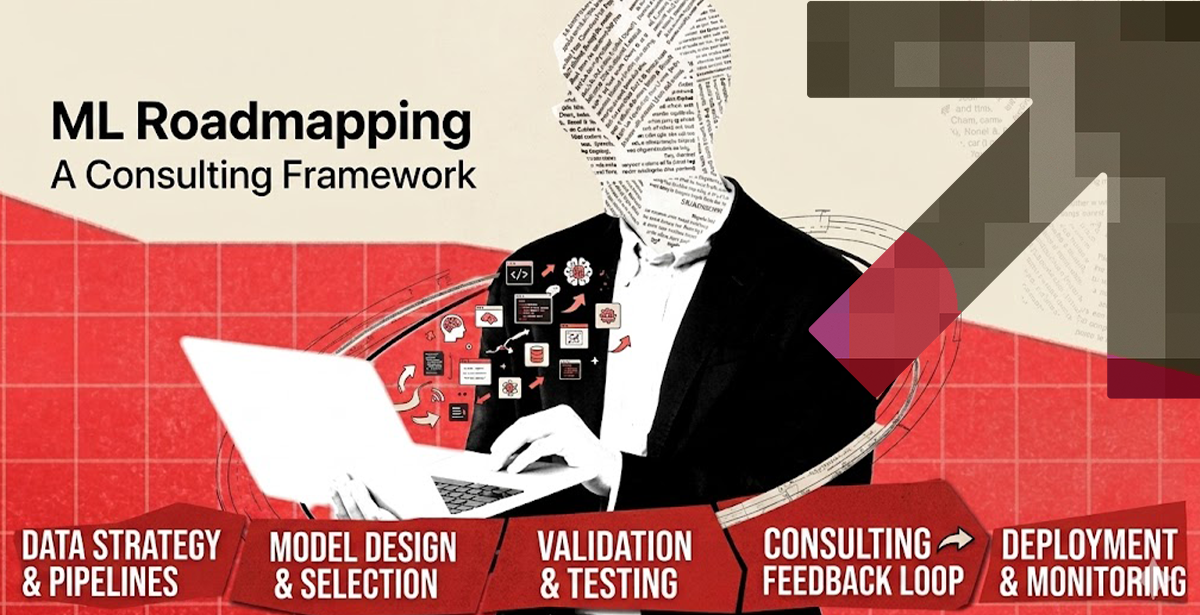
From there, a clear ML roadmap gives your team a shared framework: which problems to solve first, how to sequence the infrastructure work, and where the early wins are that build internal confidence and executive buy-in.
Just as importantly, this approach prevents organizations from overinvesting too early in platforms, tooling, or large-scale deployments before validating whether the use case can deliver real operational or financial impact.
Machine learning initiatives rarely fail because the algorithms are weak. More often, they fail because the organization lacks alignment on objectives, data readiness, ownership, and execution strategy.
Starting with assessment, validation, and roadmap planning creates the foundation needed to move from experimentation to sustainable ML adoption.
The Bottom Line
Machine learning consulting isn’t a shortcut. It’s a way to move faster by avoiding the detours that drain time and erode confidence in AI investments.
The right machine learning consulting partner brings pattern recognition from dozens of prior engagements — knowing where projects break, where they succeed, and how to get from strategy to shipped product without losing momentum.
If you’re ready to stop planning and start building, book a consultation with DPL and let’s map your ML roadmap together.